
The Guildford Food Office Heist: How Donald MacKenzie’s 1946 Ration Book Theft Became a $1.75 Million Haul – Part One
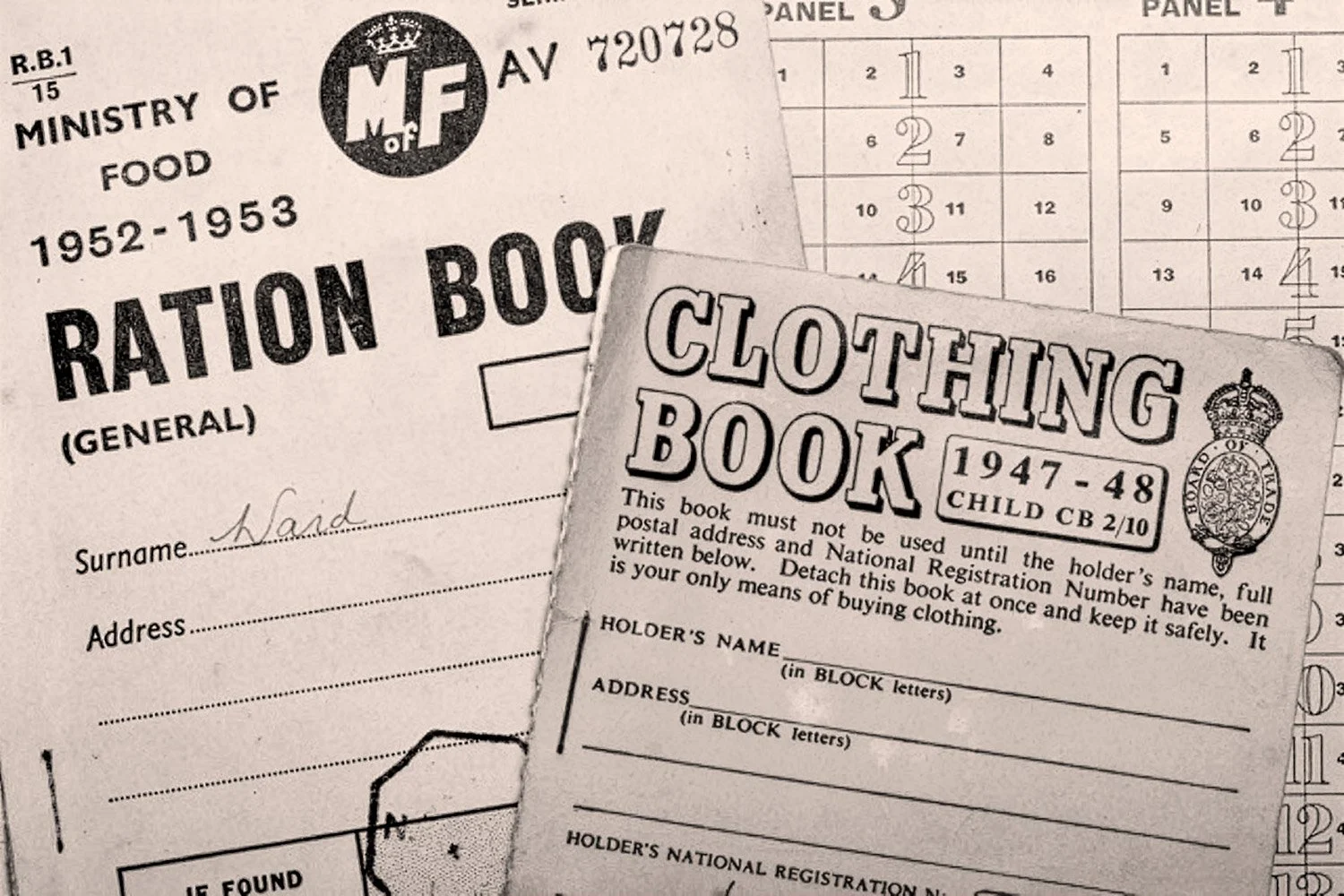
Examples of postwar British ration and clothing coupon books. In August 1946, John Rogers and an accomplice stole 1,800 ration books and 394,000 clothing coupons from the Guildford Food Office.
Aliases were always part of Donald MacKenzie’s modus operandi as a jewel thief and housebreaker. In January 1947, however, an alias changed his fortunes permanently—this time working to his detriment rather than his favor. The man who was living in style and considered himself a master larcenist found himself undone when a routine arrest exposed an alias—and led police to a cache of stolen ration books and clothing coupons worth roughly U.S. $310,000 today.
Sorting out the backstory of this episode took some sleuthing on my part—unless, that is, I wanted to accept fully the account that MacKenzie spun in his first book, the autobiographical Occupation: Thief, published in 1955 and released the same year in England as Fugitives. But I’ve learned to read critically anything the author of 38 books wanted his readers to believe about his life.
To his credit, the autobiography’s account of a major theft and subsequent capture is largely accurate. But he leaves out pieces of a more interesting puzzle—pieces that emerge from contemporaneous newspaper accounts, prison records, and letters written to literary agent Henry Volkening from his cell in Auburn State Prison in 1950. Even so, a careful reading of the newspaper articles and letters leaves unanswered questions about how the crime was actually solved, MacKenzie’s behavior during the episode, and his personal relationships at the time. Indeed, it was the latter that caused everything to collapse.
By the end of the year, many had been fenced, but he still had about £4,500 worth—equivalent to roughly $310,000 today—stashed away in an apartment at 251 Fulham Road, Chelsea.
The facts of the heist are straightforward: MacKenzie—identified as John Rogers, his primary alias at the time—along with a cohort known only as Stepka, broke into the strong room at the Guildford Food Office, Millmead House, over the holiday weekend of August 3–6, 1946. Millmead House, about 30 miles southwest of central London, was leased by the U.K. Board of Trade and Ministry of Food for the storage of ration books and clothing coupons. As MacKenzie writes in Occupation: Thief about rationing in post-war England:
It was a time when four magistrates down in Kent were fined for buying off-ration meat, when, all over the country, housewives congratulated themselves on some sly swindle whereby they outsmarted authority. There was a great and growing indifference to the ethical significance of buying twelve eggs off-ration or a weekend joint twice as large as it should be. There was plenty of money and little to buy with it. [Folks, that’s a joint of meat, not cannabis.]
Rampant inflation! We know what that’s all about. It didn’t take a genius to realize that stolen ration coupons could be sold on the black market for a hefty profit. Using a set of master keys and burglary tools, the thieves deactivated the alarms, opened a steel-lined door secured with two mortice locks, and absconded with as much paper as they could carry: 394,000 clothing coupons and 1,800 ration books. The value of these financial instruments? Roughly £25,000, or U.S. $1.75 million in 2026 dollars—a huge take even at the highly discounted black-market rate. With twenty percent going to the fence and forty percent to each of the two thieves, John Rogers’s share amounted to roughly U.S. $730,000 in 2026 dollars.
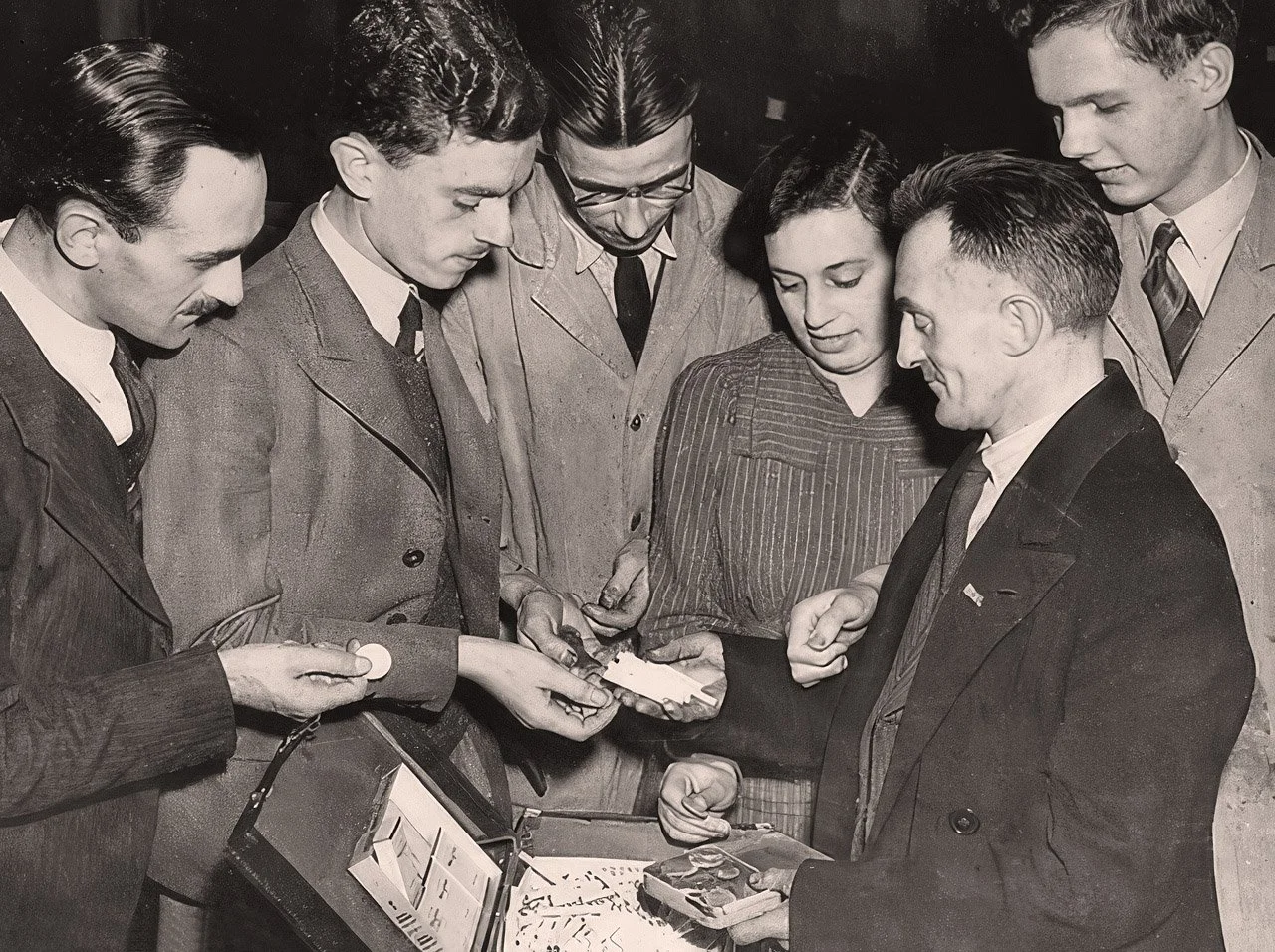
As MacKenzie writes in Occupation: Thief, postwar London “…was a world gone crazy with control and restrictions, where almost any commodity had a value on the black market. In the crowded hotel lobbies, the contact men sipped their coffee. They conversed in half a dozen languages, ready to do a deal in anything from diamonds to sausage skins, petrol or clothing coupons.” Photo courtesy of Dan O’Sullivan and his website, Welcome to Sullyville.
Things looked sweet that autumn for the 38-year-old. In a June 28, 1950, letter to Volkening, he confided: “1946 was a big year for me—I had £15,000-16,000 in the bank, a flat in Chelsea and a cottage in Sussex.” That sum would be equivalent to roughly $1.1–1.2 million in 2026 dollars. I gleaned from old newspaper accounts and the autobiography that he actually rented two, perhaps even three apartments in Chelsea in addition to the Sussex cottage. He also had two women in his life, and the overlapping domestic arrangements of his own making became complicated. Alas, he had no one to blame but himself.
Initially, the coupons and ration books were cached at the Sussex cottage, according to the autobiography. By the end of the year, many had been fenced, but he still had about £4,500 worth—equivalent to roughly $310,000 today—stashed away in an apartment at 251 Fulham Road, Chelsea. I learned about the existence of this address only through newspaper articles that reported on the heist following his arrest in January 1947. He had rented the apartment under the name Donald MacKenzie for a girlfriend—identified as Sue Kelly in Occupation: Thief—and her five-year-old daughter from a previous marriage.
MacKenzie makes clear that “Sue Kelly” was a pseudonym, but who was the woman behind it?
In the autobiography, MacKenzie leads his readers to believe that the apartment he shared with Kelly was in Belgravia rather than Chelsea, and he omits any mention of her daughter. While readers in 1955 might have accepted a sophisticated thief keeping a girlfriend as part of his raffish persona, the presence of her young daughter in their shared household may have crossed one of the era’s well-known taboos. But the youngster was certainly present. In the June 1950 letter to his literary agent, he writes:
I’d fallen deeply in love. She was everything I’d looked for in a woman. Gay, goodlooking, sophisticated. She drank, had stuffy parents, and a small daughter, aged five, and an ex. Our household was happy in a frenetic kind of way. I told nothing of my past, present, or future. I was scared of losing her. We hated one another’s friends, fought and loved pretty desperately.
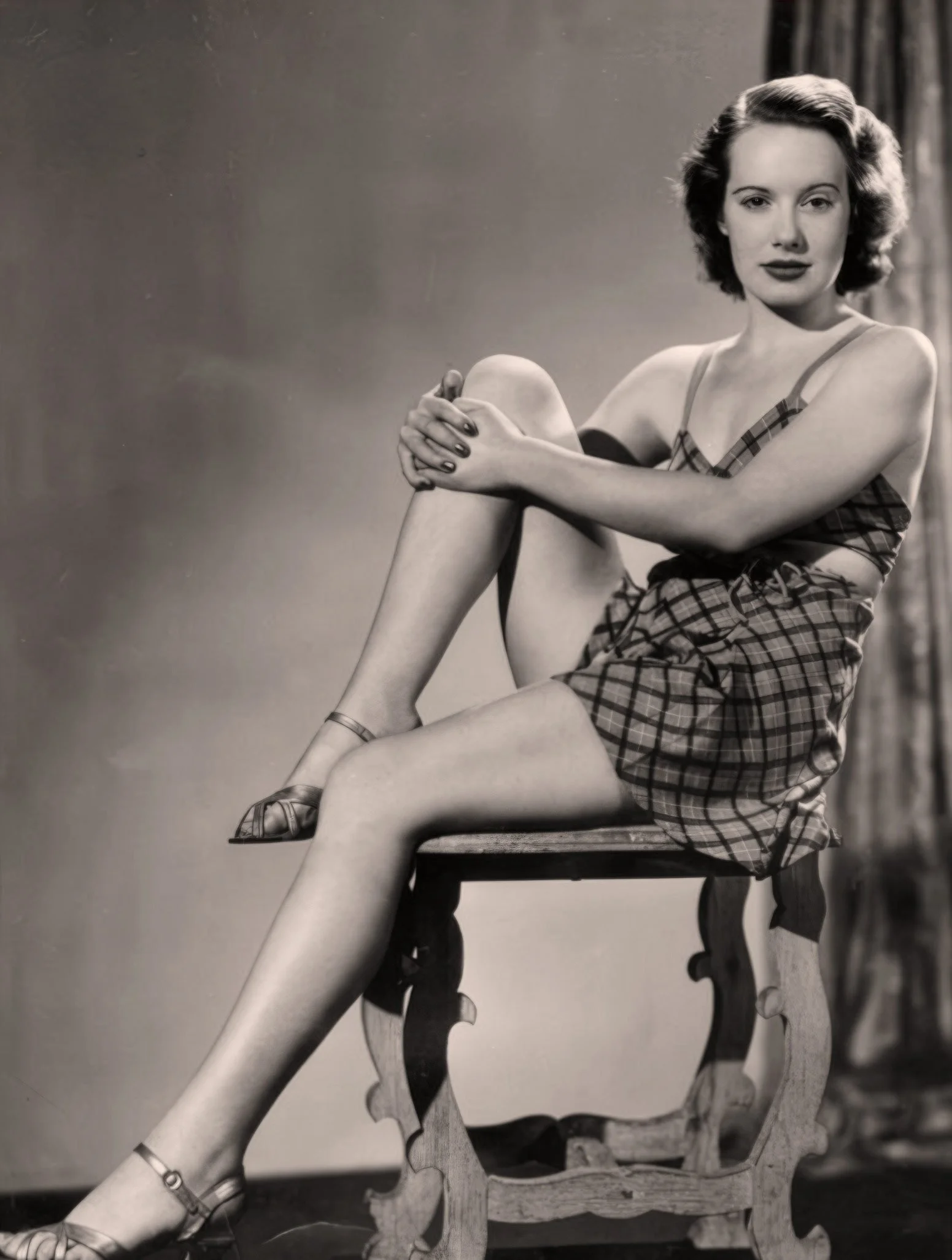
Ada Eileen Patricia “Pat” Spreckley—the woman Donald MacKenzie called “Sue Kelly” in Occupation: Thief. A model and occasional film actress, Pat was MacKenzie’s girlfriend at the time of the Guildford Food Office heist. Photograph reproduced from Carol Cleveland’s memoir, Pom Poms Up! Courtesy of Carol Cleveland.
Five years after writing that letter, MacKenzie painted a more dismissive portrait of Kelly in his newly published autobiography, hardened perhaps by her decision to dump the thief for good, marry a U.S. Air Force colonel, and settle down with her daughter in California. “I’d met Sue at a club somewhere in the Mayfair area. She was a blonde divorcée with a sophisticated front that helped me to suppose myself in love with her.” But confined to his cell in Sing Sing Prison in 1950, he was still hopeful she might be a part of his future. His 1949 prison intake records show her falsely listed as a half-sister, which would have allowed him to correspond with her. In those days, the State of New York didn’t take kindly to letters to or from a married inmate’s mistress.
MacKenzie makes clear that “Sue Kelly” was a pseudonym, but who was the woman behind it? With the help of genealogist Mark Daly, I was able to identify her through prison records in which her real name appears. She was Ada Eileen Patricia Prior Spreckley (1915–1998), known as Pat. According to the memoir Pom Poms Up! written by her daughter Carol Cleveland, Pat Spreckley worked as a model and at Riverside Film Studios in Hammersmith, London, where she played bit parts and served as a stand-in for better-known actresses. Cleveland, an actress, comedian, dancer, and model, went on to fame as the principal female performer associated with the Monty Python comedy troupe. More on my conversation with Cleveland in a later blog post.
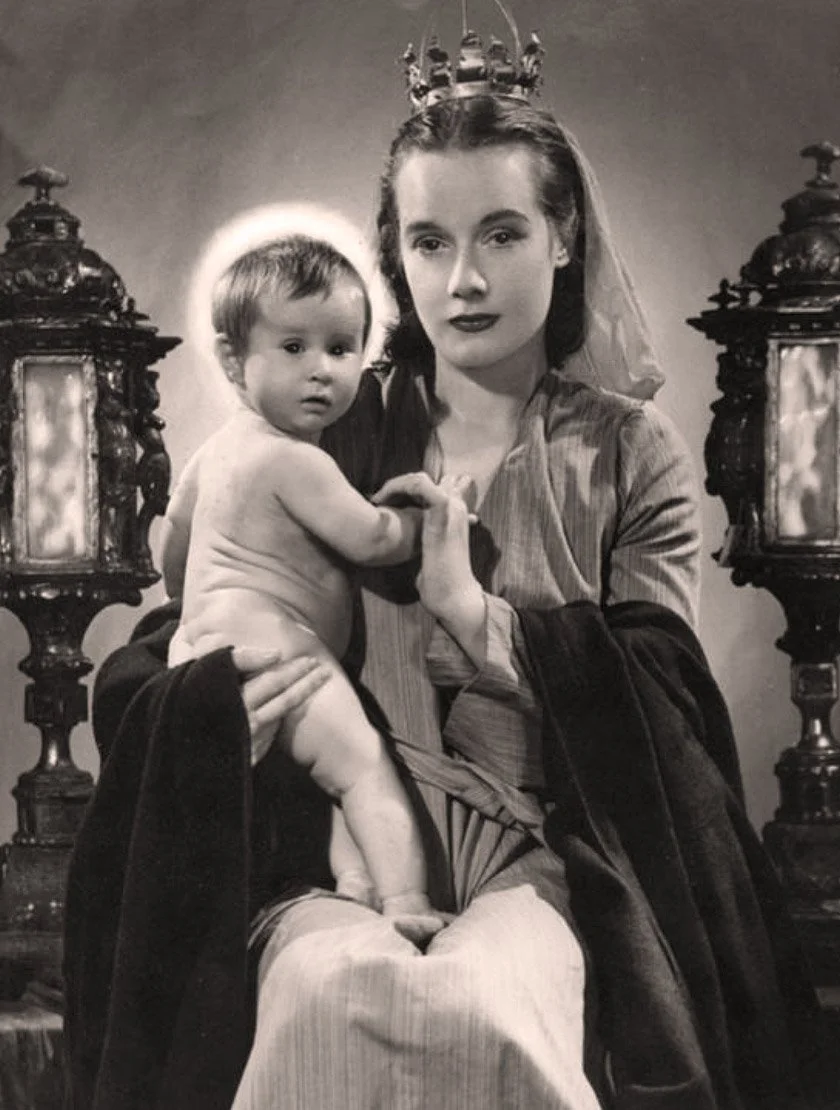
Pat Spreckley with her daughter, Carol Cleveland, in a studio photograph. MacKenzie omitted Carol’s existence from his account of the relationship in Occupation: Thief. Photograph reproduced from Carol Cleveland’s memoir, Pom Poms Up! Courtesy of Carol Cleveland. The memoir is “dedicated, with much love, to the memory of my best friend, soul mate, biggest fan, drinking buddy and life coach—my dear mother, Pat.”
Pat Spreckley knew her boyfriend only as Donald MacKenzie—which was itself an alias the con man had assumed in 1940 following his release from Dartmoor Prison. But that’s another story. MacKenzie writes in the autobiography that he maintained two identities at the time, with his car registration and driving licence in the name of John Rogers at a bachelor flat on Lawrence Street, also in Chelsea. No other accounts confirm whether the Lawrence Street apartment mentioned in the book actually existed. It may have been a fictional stand-in for another apartment in Chelsea—East House on Rosemoor Street—where Rogers may have lived in 1947 with his wife, Margaret Jenkins Rogers. Margaret was not alone. Four months before her husband’s arrest, she had given birth to their daughter, Caroline.
The master thief was juggling not only aliases and addresses, but two households. The entire arrangement would soon come crashing down.
Next post: Read how a routine police stop set in motion the collapse of MacKenzie’s carefully constructed double life—and ultimately led police to solve one of Britain’s most sensational postwar thefts.