
The Guildford Food Office Heist: How Donald MacKenzie’s Multiple Identities and Households Brought It All Down – Part Two
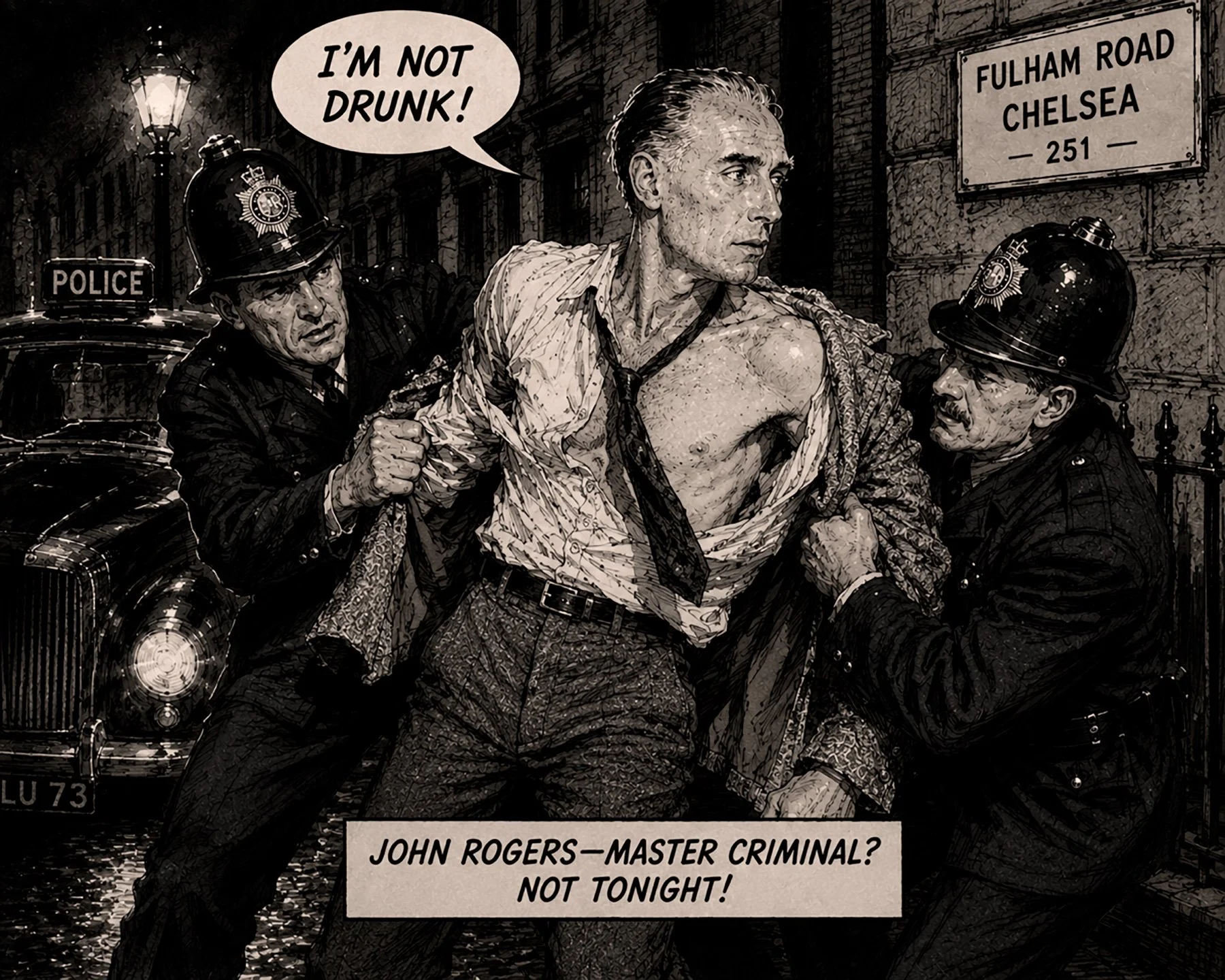
As reported in The Surrey Advertiser & County Times, January 13, 1947. “The accused was searched after he had been charged with driving a motor vehicle whilst under the influence of drink. Inside his pants was found a wallet which contained a passport in the name of D. MacKenzie. Found upon him also was a bunch of keys.”
On January 13, 1947, a routine arrest for driving under the influence set in motion the unraveling of one of Britain’s biggest postwar thefts. The man arrested was John Rogers—one of several aliases used by Donald MacKenzie. Five months earlier, the 38-year-old and a cohort known only as Stepka had stolen 394,000 clothing coupons and 1,800 ration books from the Guildford Food Office. It was quite a haul. See my earlier post of August 6, 2026.
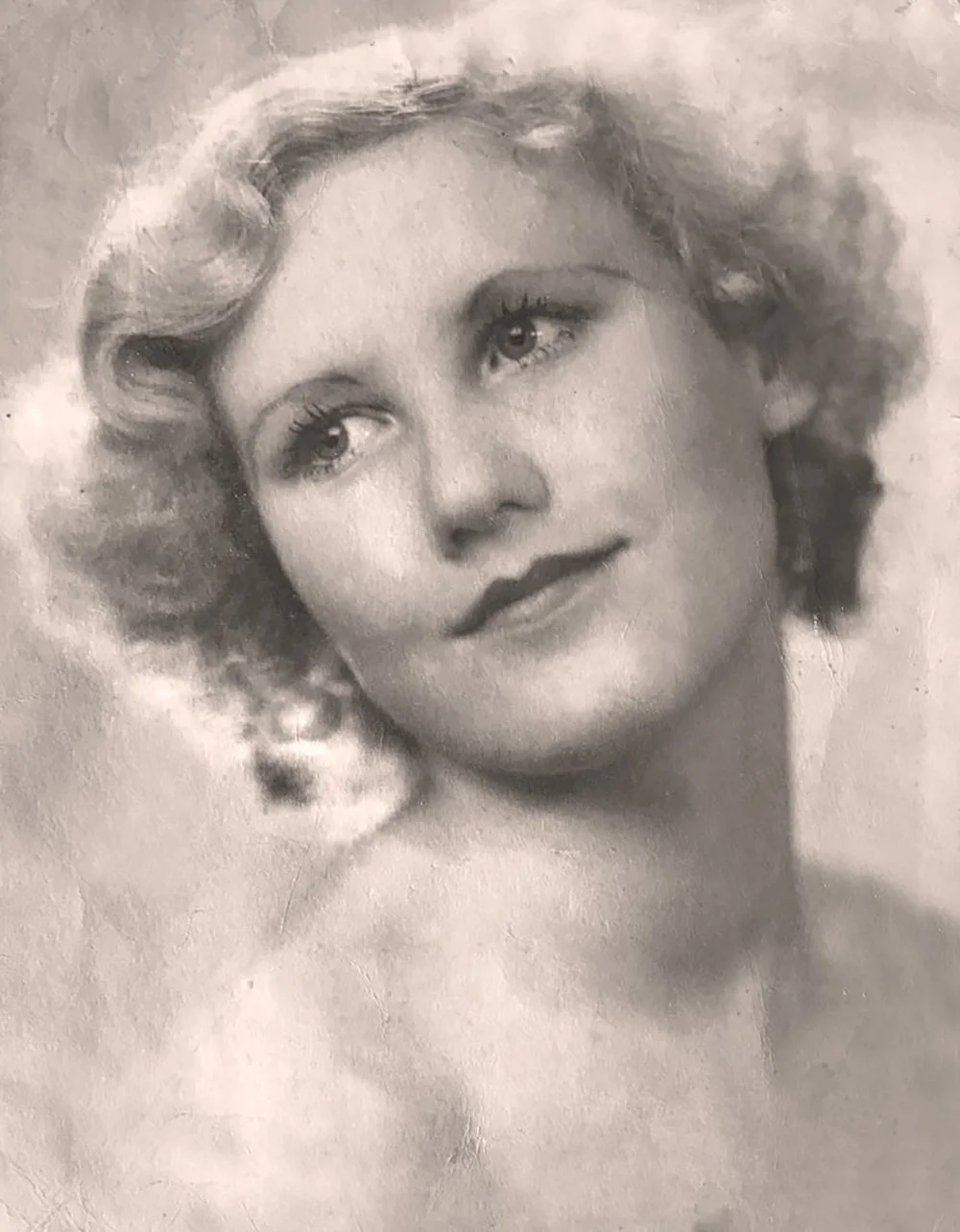
Margaret Jenkins (1919–2004) grew up in a happy household in Tooting, South London. Shared with her parents and four siblings, the home was filled with song and laughter, according to a memoir written by her younger brother Bobby. Photo courtesy of Jane Brown, niece of Margaret Jenkins.
The government-printed vouchers had a street value of roughly £25,000, or U.S. $1.75 million in 2026 dollars. Reporting on the crime later that day, The Evening Standard revealed a Chelsea address as the official residence for Rogers, the principal alias Donald MacKenzie was using at the time. This apartment—East House on Rosemoor Street—was never mentioned in his 1955 autobiographical book, Occupation: Thief. My opinion is that it was a household he may have shared with his wife.
John Rogers and Margaret Jenkins (1919–2004) were married on August 11, 1944. Known as Peggy, she was a music hall dancer, a profession she shared with her sisters Vera and Rita and her sister-in-law Ida. Ida’s husband and the Jenkins girls’ younger brother, Bobby, was also a comedian and dancer, and all performed under the stage name King. MacKenzie mentioned Bob King as a good friend in several places—his autobiography, letters, and prison records—and I suspect it was through Bob that he met Margaret. The family achieved considerable professional success, with Margaret dancing for a while as a Sherman Fisher Girl and as a Tiller Girl, the British equivalent of New York City’s Radio City Rockettes.
It should be mentioned that Rogers, described by The Evening Standard as an actor, was a relatively new father. Caroline Jane Teresa Rogers was born September on 10, 1946. But his relationship with his wife and infant daughter appeared less than ideal by January of the following year, as indicated in the autobiography:
Margaret had been staying with her mother for a while. This suited me well enough. My wife trusted me completely. There were few of the usual ties. I was spending more time away from her than with her. The alleged reason for this was business. Margaret never knew where the money came from. She believed what she wanted to believe to a fantastic degree. My tales of vague coups on the black market, deals in surplus stores, made it easy for her. People we knew were making fortunes overnight in the same way. My story fitted in with the general pattern of the life I was leading. With the baby taking up much of her time, Margaret came to accept my continued absences as essential to the life she supposed me to be leading.
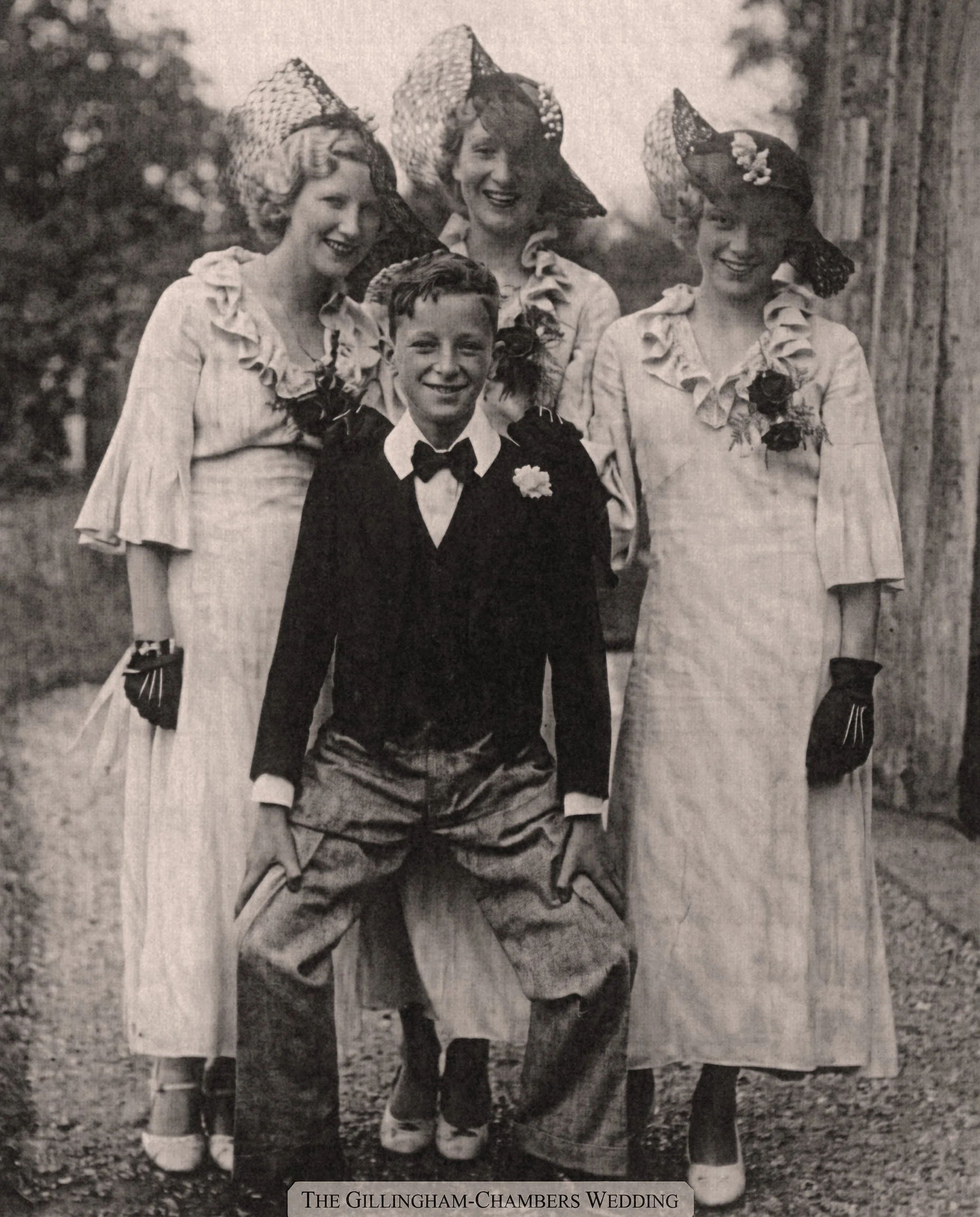
Entertainment was the family profession of four of the five Jenkins kids. Vera Evelyn, Margaret, and Rita (left to right) were all music hall dancers, performing under the stage name of King. Bobby King was a comedian and tap dancer from an early age and somehow found the time to be a close friend of John Rogers, AKA Donald MacKenzie. Photo courtesy of Jane Brown, niece of Margaret Jenkins.
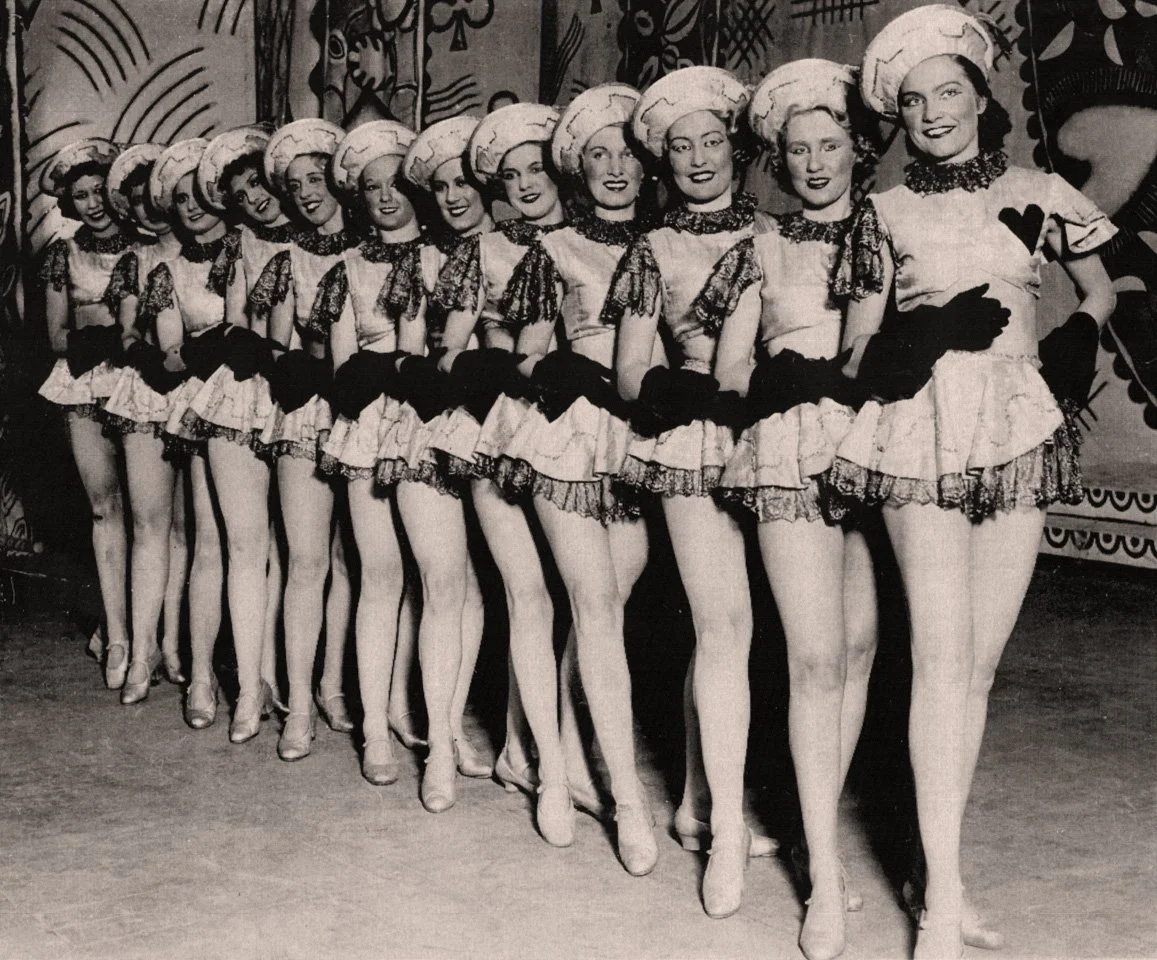
Margaret Jenkins, second from the right, in a promotional photo for the Sherman Fisher Dancers. Photo courtesy of Jane Brown, niece of Margaret Jenkins.
In fact, during his initial interview at Sing Sing Prison in 1949, MacKenzie claimed that the couple had “separated in 1945 because of his criminal record.” They may have been separated, or they may still have been living together on Rosemoor Street—it is difficult to know for certain. Whatever the living arrangements, they had clearly been together when Caroline was conceived sometime in December 1945. According to the autobiography, on the day before his arrest on January 13, Rogers had “spent the day over at Wimbledon with Margaret and the baby.” This makes sense, since Margaret’s parents’ home on Blackshaw Road in Tooting is just two miles from Wimbledon. For an author known to stretch the truth, the site of world-famous tennis tournaments certainly had a more sophisticated ring than Tooting.
Here’s where it gets interesting. MacKenzie writes in the autobiography that it was at dinnertime on Sunday, January 12, before he returned to the apartment at 251 Fulham Road, Chelsea. This was the household he maintained with his girlfriend, Sue Kelly, and her five-year-old daughter from a previous marriage. As related in my last blog post, “Sue Kelly” was the pseudonym MacKenzie later used for Pat Spreckley (1915–1998), a model and part-time actress. In the autobiography, MacKenzie constructs a story in which Pat learns from a show-business friend that her boyfriend—known to her only as Donald MacKenzie—is married.
Margaret had been in show business. So had Sue. They were approximately the same age. Sooner or later, the circles of mutual acquaintances were bound to intersect. And sooner or later, either Sue or Margaret would know that the other existed. Then the trouble would really start. Deliberately, I’d engineered a set of circumstances that could result in but one conclusion. “You bum,” she said flatly, “you no-good bastard. You don’t even have the courage to tell me the truth.”
After a shouting match in which they laid bare their grievances against one another, MacKenzie stormed out of the Fulham Road apartment and ended up at the Coconut Grove nightclub in Mayfair. He writes artfully in the autobiography that when he left in the wee hours of January 13 he was “conventionally sober. I had a party of guests who had to be dropped in Putney and I drove carefully.” Nevertheless, he was later stopped by a patrol car and asked for his license and identity card. He admits that his “manner was pretty hard” and suggests that he had not shown the officer sufficient deference at 2:30 in the morning. He was arrested for driving under the influence and taken to Walham Green Police Station in Hammersmith and Fulham, just west of Chelsea.
Where did MacKenzie get the idea for the autobiographical account of his fight with Sue? Did it really happen? This version seems to have been hatched in a November 15, 1950, letter to his literary agent, Henry Volkening. He writes about having a fight with his wife—but identified in the letter as Pat, not Margaret—over the death of their dog Tar Baby, a poodle she loved. After the argument…
Weeks went by and we were nodding to one another at breakfast. I was leaving the house and returning in the small hours. On one of these nocturnal jaunts in search of self-respect, I landed in some joint with a trollop I normally would have avoided. We drank and eventually I dropped her at her lair. Police stopped me. You’re drunk, said they. How dare you, said I. They won and I landed in the station house.
At this point, the two narratives—an argument with Pat, followed by MacKenzie’s drinking and his arrest for DUI—align, but both differ substantially from the contemporaneous newspaper account. The more likely scenario is recounted in the January 31, 1947, issue of The Kensington News and West London Times:
Asked [by the police] where he had been the actor replied that he had taken a girl from a night club to Putney and was on his way home. Sgt. Chandler said that when taken to Walham Green police station Rogers attempted to escape. He kicked the sergeant on the knee and broke away. Chased and caught he slipped out of his jacket and got away again. He escaped a third time by slipping out of his pullover but was finally detained.
This is not quite the behavior of the sophisticated criminal that MacKenzie continually sought to portray in Occupation: Thief and later writings.
In addition, both the autobiography and the November 15 letter to Volkening employ a similar fictional device: an observant detective discovers that John Rogers maintained a second apartment, one different from the address listed on his driving license and vehicle registration. In both accounts, a detective at Walham Green explains to Rogers that a woman—identified as Mrs. Kelly in the autobiography and Mrs. MacKenzie in the letter—had called the police station. Giving her address as 251 Fulham Road, she was reportedly worried that her partner—a boyfriend in the autobiography, a husband in the letter to Volkening—had not returned home and might have been in an accident.
“Why the two addresses?” the detective supposedly asked. Curious, the police went to the Fulham Road apartment, where they found two suitcases containing the remaining government vouchers—about £4,500 worth, equivalent to roughly $310,000 today—and a portmanteau filled with an array of master keys and burglary tools.
But a more likely explanation for how police discovered the Fulham Road apartment appears in a February 8, 1947, article in The Surrey Advertiser & County Times:
The accused was searched after he had been charged with driving a motor vehicle whilst under the influence of drink. Inside his pants was found a wallet which contained a passport in the name of D. MacKenzie. Found upon him also was a bunch of keys.
The passport led the police to 251 Fulham Road—not a phone call from a distraught Pat Spreckley—and the keys found in Rogers’s possession opened both the locked suitcases there and the mortice locks that had secured the Guildford Food Office five months earlier. My view is that the stories MacKenzie told in the November 15, 1950 letter to his agent and, five years later, in the autobiography were far more scintillating than a retelling of the dull and embarrassing procedural fact that the police had found incriminating evidence in his pants. In this case, the truthful newspaper article made the master thief look not-so-masterful, and MacKenzie wasn’t about to let that happen in his first book.
There’s much more to this adventure—and to the sometimes doubtful but always colorful account MacKenzie gives in Occupation: Thief. He jumped bail before his criminal trial for the Guildford Food Office heist, getting into trouble in Europe, North Africa, and California before being arrested for the last time in New York City in December 1948.
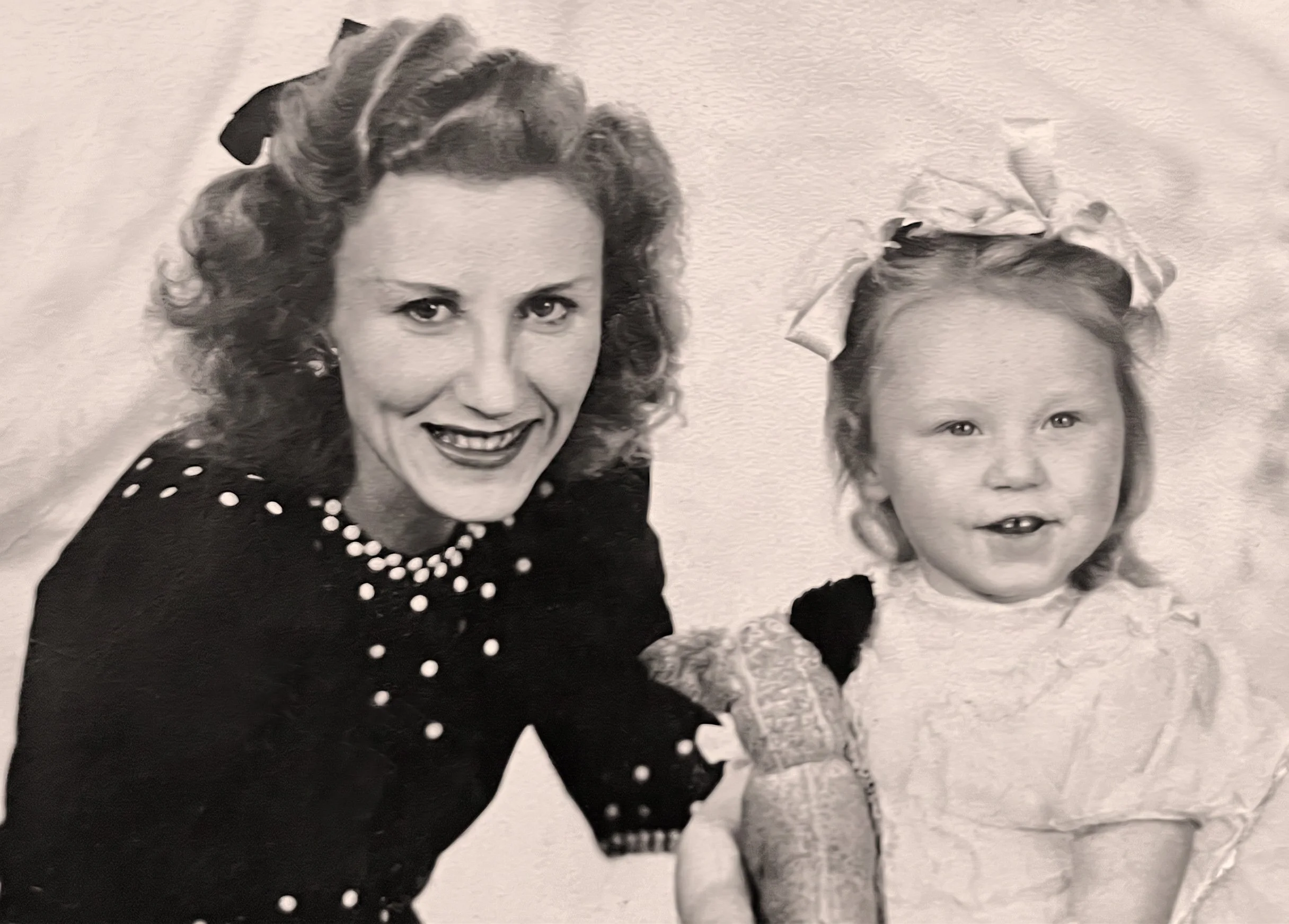
Margaret and Caroline Rogers. This photo probably dates to the late 1940s, when husband John Rogers, AKA Donald MacKenzie, was on the lam from British authorities for the Guildford Food Office heist. Photo courtesy of Margaret’s daughter, Caroline Rolf, and granddaughter, Nicki Rolf.
I highly recommend the autobiography, copies of which are readily available through online used-book sellers. Following his release from prison in 1954, he surprisingly tried to make a go of it with his wife, Margaret, and daughter, Caroline, then about eight years old. This attempted reconciliation is briefly mentioned at the beginning of the autobiography, but its prospects seemed doubtful considering the stress MacKenzie had put his family through for nearly ten years. But MacKenzie’s daughter, Caroline Rogers Rolf has corroborated the attempted reconciliation in considerably more detail. More on my Zoom calls with her and her daughter, Nicki Rolf, in a future blog post.
During his prison correspondence with Henry Volkening in 1950, MacKenzie was still experimenting with how lived experience—even a life as eventful and steeped in the criminal underworld as his own—could be transformed into fiction that people actually wanted to read. By the time Occupation: Thief was published five years later, he had learned the lesson well. In reshaping the embarrassing facts of his arrest into a more colorful and compelling story, MacKenzie was not merely rewriting his past; he was turning himself into a character of his own creation.